
Subaru Crosstrek Service Manual: Removal
FUEL INJECTION (FUEL SYSTEMS)(H4DO) > Oil Control Solenoid
REMOVAL
CAUTION:
If the engine oil is spilt over exhaust pipe or the under cover, wipe it off with cloth to avoid emission of smoke or causing a fire.
1. INTAKE SIDE
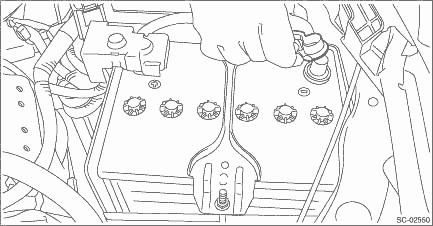
1. Disconnect the ground cable from battery.
2. Remove the air intake duct. (RH side only) Air Intake Duct > REMOVAL">
3. Remove the reservoir tank. (LH side only) Reservoir Tank > REMOVAL">
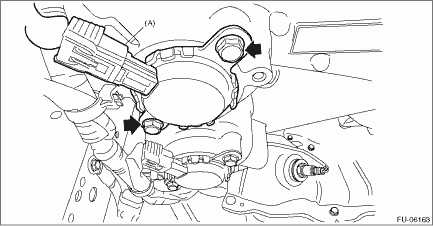
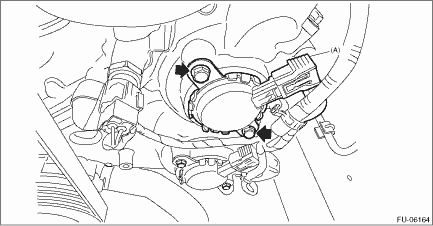
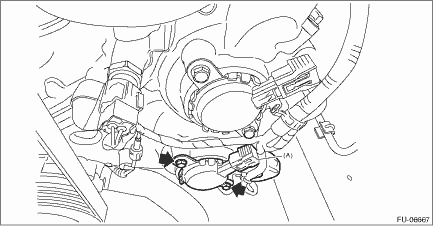
4. Disconnect the connector (A) from the oil control solenoid, and remove the oil control solenoid from the chain cover.
• RH side
• LH side
2. EXHAUST SIDE
1. Disconnect the ground cable from battery.
2. Remove the air intake duct. (RH side only) Air Intake Duct > REMOVAL">
3. Remove the reservoir tank. (LH side only) Reservoir Tank > REMOVAL">
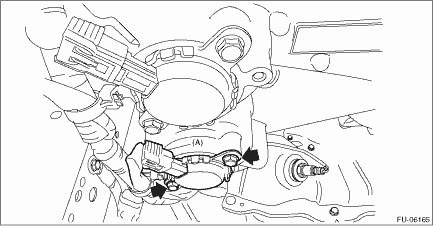
4. Disconnect the connector (A) from the oil control solenoid, and remove the oil control solenoid from the chain cover.
• RH side
• LH side
 Inspection
FUEL INJECTION (FUEL SYSTEMS)(H4DO) > Oil Control SolenoidINSPECTION1. Check that the oil control solenoid has no deformation, cracks or other damages.2. Measure the resistance between the oil cont ...
 Installation
FUEL INJECTION (FUEL SYSTEMS)(H4DO) > Oil Control SolenoidINSTALLATIONInstall in the reverse order of removal.NOTE:• Use new O-rings.• Apply engine oil to O-ring.Tightening torque:6.4 N ...
Other materials:
Dtc b1827 short in side airbag lh (to ground)
AIRBAG SYSTEM (DIAGNOSTICS) > Diagnostic Chart with Trouble CodeDTC B1827 SHORT IN SIDE AIRBAG LH (TO GROUND)Diagnosis start condition:Ignition voltage is 10 V to 16 V.DTC detecting condition:• Side airbag harness (LH) circuit is shorted to ground.• Side airbag module (LH) is faulty.& ...
Removal
HVAC SYSTEM (HEATER, VENTILATOR AND A/C) > Blower MotorREMOVAL1. Disconnect the ground cable from battery. NOTE">2. Release the clips, and remove the under cover assembly - passenger.3. Remove the blower - motor.(1) Disconnect the connector.(2) Remove the screws and detach the blower - m ...
Inspection
TIRE PRESSURE MONITORING SYSTEM (DIAGNOSTICS) > Subaru Select MonitorINSPECTION1. COMMUNICATION FOR INITIALIZING IMPOSSIBLEDetecting condition:Defective harness connectorTrouble symptom:Communication is impossible between the TPMS & keyless entry CM or TPMS CM and the Subaru Select Monitor.WI ...
