
Subaru Ascent 2018-2026 Owner's Manual: Glossary of tire terminology
- Accessory weight
In the context of your Subaru Ascent, accessory weight refers to the total additional mass of optional equipment beyond standard components. This includes features such as automatic transmission, power steering, power brakes, power windows, powered seats, audio systems, and climate control equipment, regardless of whether all these items are actually installed.
- Bead
The bead is the reinforced edge of the tire that securely fits onto the wheel rim. In your Subaru Ascent, it is constructed from strong steel wires wrapped in layers of cord material, ensuring a tight seal and proper tire seating.
- Bead separation
This term describes a failure in the bond between the components of the bead area, which may compromise the structural integrity of the tire on your Subaru Ascent.
- Bias ply tire
A bias ply tire features internal cord layers arranged at alternating angles of less than 90 degrees relative to the centerline of the tread. While less common on modern Subaru Ascent models, understanding this design helps differentiate it from radial construction.
- Carcass
The carcass is the internal framework of the tire that supports the load when inflated. In your Subaru Ascent, it excludes the tread and sidewall rubber but plays a critical role in maintaining tire strength and shape.
- Chunking
Chunking refers to the loss or tearing away of portions of the tread or sidewall, often caused by harsh driving conditions or excessive wear in your Subaru Ascent tires.
- Cold tire pressure
This is the tire pressure measured when the Subaru Ascent has been stationary for at least three hours or driven less than 1 mile (1.6 km), ensuring an accurate reading unaffected by heat buildup.
- Cord
Cords are the structural strands embedded within the tire plies, providing strength and stability to the tires used on your Subaru Ascent.
- Cord separation
This condition occurs when the cords detach from the surrounding rubber material, potentially weakening the tire structure and affecting safety in your Subaru Ascent.
- Cracking
Cracking refers to splits or separations in the tread, sidewall, or inner liner that extend down to the cord layer, indicating aging or deterioration of your Subaru Ascent tires.
- Curb weight
The curb weight of your Subaru Ascent represents the total weight of the vehicle with standard equipment, including full fuel, oil, coolant, and installed optional features such as air conditioning.
- Extra load tire
An extra load tire is specifically engineered to carry higher loads and operate at increased inflation pressures compared to standard tires, offering enhanced durability for your Subaru Ascent.
- Groove
Grooves are the channels between tread ribs that help disperse water and improve traction, particularly in wet driving conditions for your Subaru Ascent.
- Innerliner
The innerliner is the inner layer of a tubeless tire that retains air pressure within the tire structure, ensuring consistent performance in your Subaru Ascent.
- Innerliner separation
This occurs when the innerliner detaches from the carcass cords, which may lead to air leakage and reduced reliability of your Subaru Ascent tires.
- Intended outboard sidewall
(1) The sidewall featuring branding, raised lettering, or decorative elements that distinguish it from the opposite side, or
(2) The designated outer-facing side of an asymmetrical tire that must always be installed facing outward on your Subaru Ascent.
- Light truck (LT) tire
An LT tire is designed primarily for use on light trucks or multipurpose vehicles. In certain configurations, such tires may also be compatible with the Subaru Ascent depending on load requirements.
- Load rating
The load rating indicates the maximum weight a tire can safely support at a specified inflation pressure when installed on your Subaru Ascent.
- Maximum inflation pressure
This is the highest permissible cold tire pressure recommended for safe operation of the tire on your Subaru Ascent.
- Maximum load rating
The maximum load rating defines the highest load a tire can carry when inflated to its maximum allowable pressure.
- Maximum loaded vehicle weight
This value represents the total allowable weight of your Subaru Ascent when fully loaded, including:
- Curb weight
- Accessory weight
- Vehicle capacity weight
- Production options weight
- Maximum permissible inflation pressure
The maximum cold inflation pressure to which a tire may be safely inflated for use on your Subaru Ascent.
- Measuring rim
The measuring rim is the specific wheel size used to determine the dimensional characteristics of a tire.
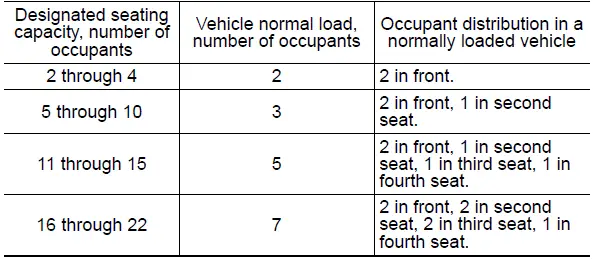
- Normal occupant weight
This refers to an estimated weight of 150 lbs (68 kg) per passenger, multiplied by the seating capacity specified for your Subaru Ascent.
- Occupant distribution
This term describes how passengers are distributed within the vehicle seating positions in your Subaru Ascent.
- Open splice
An open splice indicates a separation at any joint in the tread, sidewall, or innerliner extending to the cord layer, which may weaken the tire.
- Outer diameter
The overall diameter of a fully inflated new tire mounted on your Subaru Ascent.
- Overall width
The total width of an inflated tire, including any protrusions such as sidewall lettering or protective ribs.
- Passenger car tire
A tire specifically designed for use on passenger vehicles like the Subaru Ascent, optimized for comfort, handling, and fuel efficiency under typical driving conditions.
This glossary helps Subaru Ascent owners better understand tire-related terminology, enabling more informed decisions regarding maintenance, safety, and tire replacement.
A tire designed for use on passenger cars, multipurpose passenger vehicles, and light-duty trucks such as the Subaru Ascent, provided that the gross vehicle weight rating (GVWR) does not exceed 10,000 lbs (4,535 kg). These tires are engineered to deliver balanced performance, safety, and comfort for everyday driving conditions.
- Ply
A ply is a structural layer within the tire composed of parallel cords coated with rubber. In Subaru Ascent tires, multiple plies work together to provide strength, flexibility, and load-bearing capability.
- Ply separation
Ply separation refers to the detachment between adjacent layers within the tire structure. This condition can weaken the tire and negatively impact the safety and performance of your Subaru Ascent.
- Pneumatic tire
A pneumatic tire is a complex mechanical component made from rubber, reinforcing fabrics, steel, and other materials. When mounted on a wheel, it provides traction and supports the vehicle load by containing pressurized air or gas, ensuring smooth and controlled driving for your Subaru Ascent.
- Production options weight
This refers to the additional weight of optional factory-installed equipment that exceeds standard components. For the Subaru Ascent, this may include upgrades such as heavy-duty braking systems, suspension enhancements, roof racks, reinforced batteries, and premium trim elements.
- Radial ply tire
A radial tire features cord layers arranged at approximately 90 degrees to the centerline of the tread. This modern construction, commonly used on Subaru Ascent vehicles, enhances durability, ride comfort, and fuel efficiency.
- Recommended inflation pressure
This is the cold tire pressure specified by the manufacturer for optimal performance and safety. For your Subaru Ascent, always follow the recommended inflation values listed on the vehicle placard.
- Reinforced tire
A reinforced tire is engineered to handle higher loads and operate at increased pressures compared to standard tires. Such tires may be suitable for specific Subaru Ascent configurations depending on load requirements.
- Rim
The rim is the metal wheel structure onto which the tire is mounted. It supports the tire and ensures proper seating of the bead in your Subaru Ascent.
- Rim diameter
This measurement indicates the nominal diameter of the rim where the tire bead is seated, typically expressed in inches.
- Rim size designation
The rim size designation combines both the diameter and width of the rim, ensuring compatibility with the correct tire size for your Subaru Ascent.
- Rim type designation
This refers to the industry-standard classification used to identify rim styles or codes based on manufacturer specifications.
- Rim width
The rim width is the nominal distance between the inner flanges of the rim, which directly influences tire fitment and performance on your Subaru Ascent.
- Section width
This is the distance between the outer sidewalls of an inflated tire, excluding any raised lettering or decorative elements.
- Sidewall
The sidewall is the portion of the tire located between the tread and the bead. It provides flexibility and absorbs road impacts for improved ride comfort in your Subaru Ascent.
- Sidewall separation
This condition occurs when the rubber compound separates from the internal cord structure within the sidewall, potentially compromising tire integrity.
- Snow tire
A snow tire is specifically designed to provide enhanced traction on snow and
ice. It meets or exceeds a traction index of 110 compared to standard reference
tires and is identified by the Alpine symbol " "
on the sidewall. For optimal winter performance, using snow tires on your Subaru
Ascent is highly recommended in cold climates.
"
on the sidewall. For optimal winter performance, using snow tires on your Subaru
Ascent is highly recommended in cold climates.
- Test rim
The test rim is used for tire evaluation and may vary depending on the testing requirements, but must be compatible with the tire specifications.
- Tread
The tread is the outermost surface of the tire that comes into direct contact with the road, providing traction, grip, and stability for your Subaru Ascent.
- Tread rib
A tread rib is a continuous section of tread that runs circumferentially around the tire, contributing to handling and water dispersion.
- Tread separation
This refers to the detachment of the tread from the tire carcass, which can lead to dangerous driving conditions if not addressed promptly in your Subaru Ascent.
- Treadwear indicators (TWI)
Treadwear indicators are built-in markers within the tread grooves that visually indicate when the tire has reached its wear limit and requires replacement.
- Vehicle capacity weight
This value represents the combined weight of cargo and luggage along with 150 lbs (68 kg) multiplied by the number of seating positions in your Subaru Ascent.
- Vehicle maximum load on the tire
This is the maximum load applied to an individual tire, calculated by distributing the total vehicle load across both axles and dividing by two.
- Vehicle normal load on the tire
This value represents the typical load on a tire during normal operation of your Subaru Ascent, including curb weight, accessories, and passenger weight.
- Wheel-holding fixture
A device used during testing to securely hold the wheel and tire assembly in place.
Table 1 - Occupant loading and distribution for vehicle normal load for various designated seating capacities
This extended glossary provides Subaru Ascent owners with a deeper understanding of tire-related terminology, supporting правильний вибір шин, безпечну експлуатацію та ефективне обслуговування автомобіля в будь-яких умовах експлуатації.
 Recommended tire inflation pressure
Recommended cold tire inflation pressure
To ensure optimal handling, safety, and tire longevity for your Subaru Ascent,
always follow the recommended cold tire inflation pressures specified for you ...
 Tire care - maintenance and safety practices
For reliable performance of your Subaru Ascent, inspect the tires ежедневно
or before each drive to ensure they are free from serious damage, embedded objects
such as nails or stones ...
Other materials:
Disassembly
CONTINUOUSLY VARIABLE TRANSMISSION(TR580) > Transfer Driven GearDISASSEMBLY1. Remove the ball bearing using ST.ST1 498077400BEARING REMOVERST2 899864100REMOVER ...
Inspection
DRIVE SHAFT SYSTEM > Rear Drive ShaftINSPECTIONCheck the removed parts for damage, wear, corrosion etc. Repair or replace if defective.• DOJ (Double Offset Joint):Check for seizure, corrosion, damage, wear and excessive play.• BJ (Bell Joint):Check for seizure, corrosion, damage and e ...
Inspection
HVAC SYSTEM (HEATER, VENTILATOR AND A/C) > Refrigerant Pressure with Manifold Gauge SetINSPECTION1. INSPECTION WITH PRESSURE SYMPTOMSSymptomsReferenceBoth high and low pressure sides are low. Refrigerant Pressure with Manifold Gauge Set > INSPECTION">Both high and low pressure sides ar ...
